Score.
Fold.
Crack.
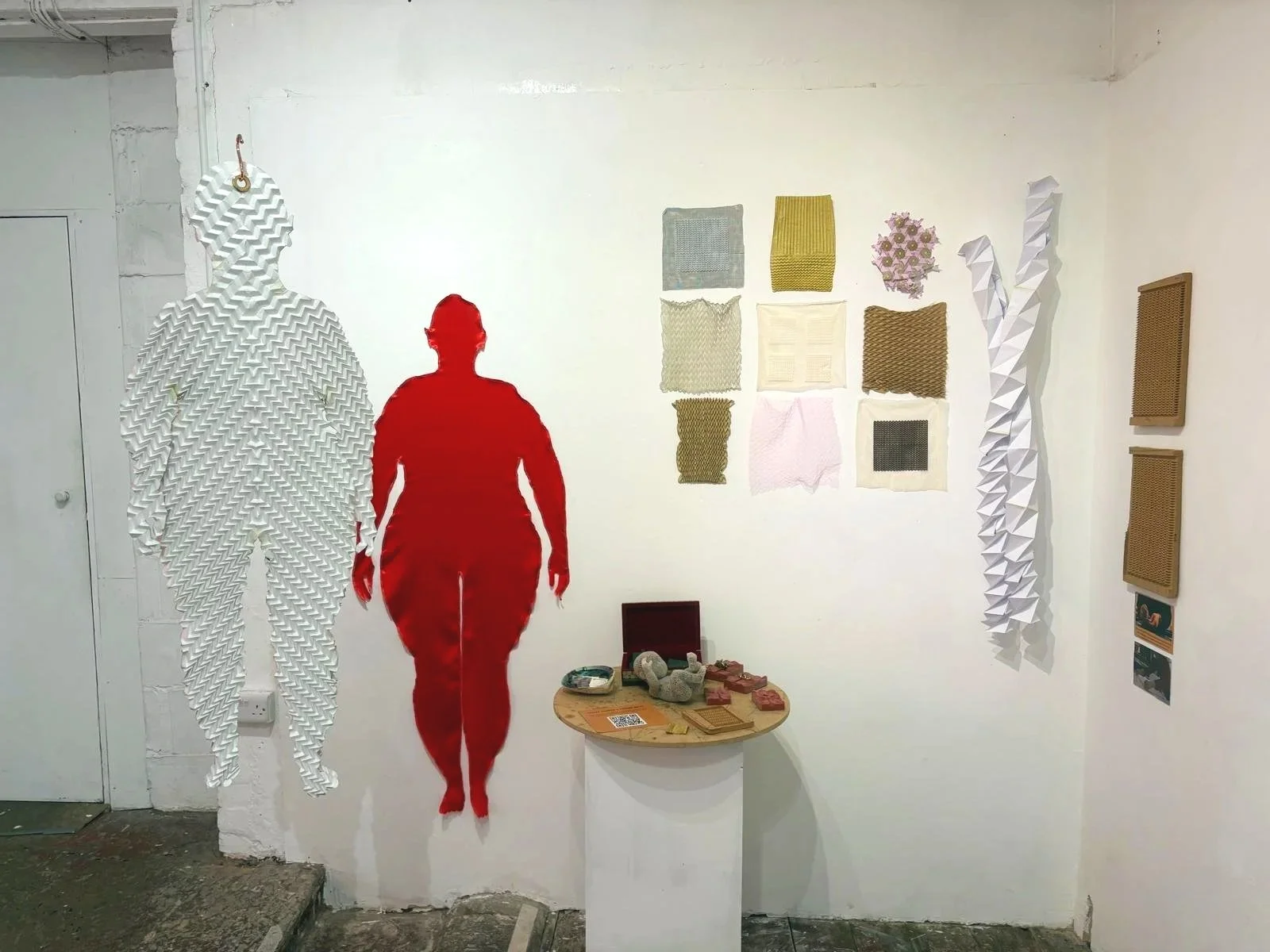
People Fold, Cornonal plane.
Materials
Scored card 240gsm, satin, steam (heat).
Dimensions
Approx. 75-155 cm.
Research key
Micropleating · Origami · Biomechanics · Morphology · Adaptive textiles
Team
QR² with studio assistants Cem Karaderi and Vanessa N.
Year
2026
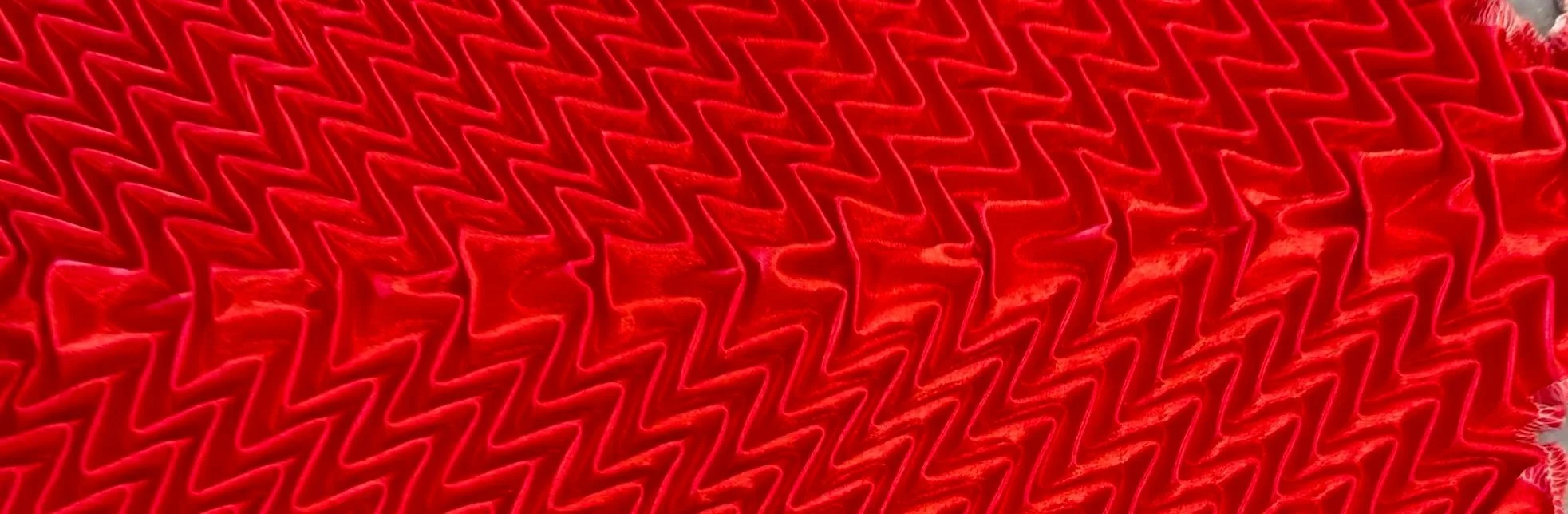
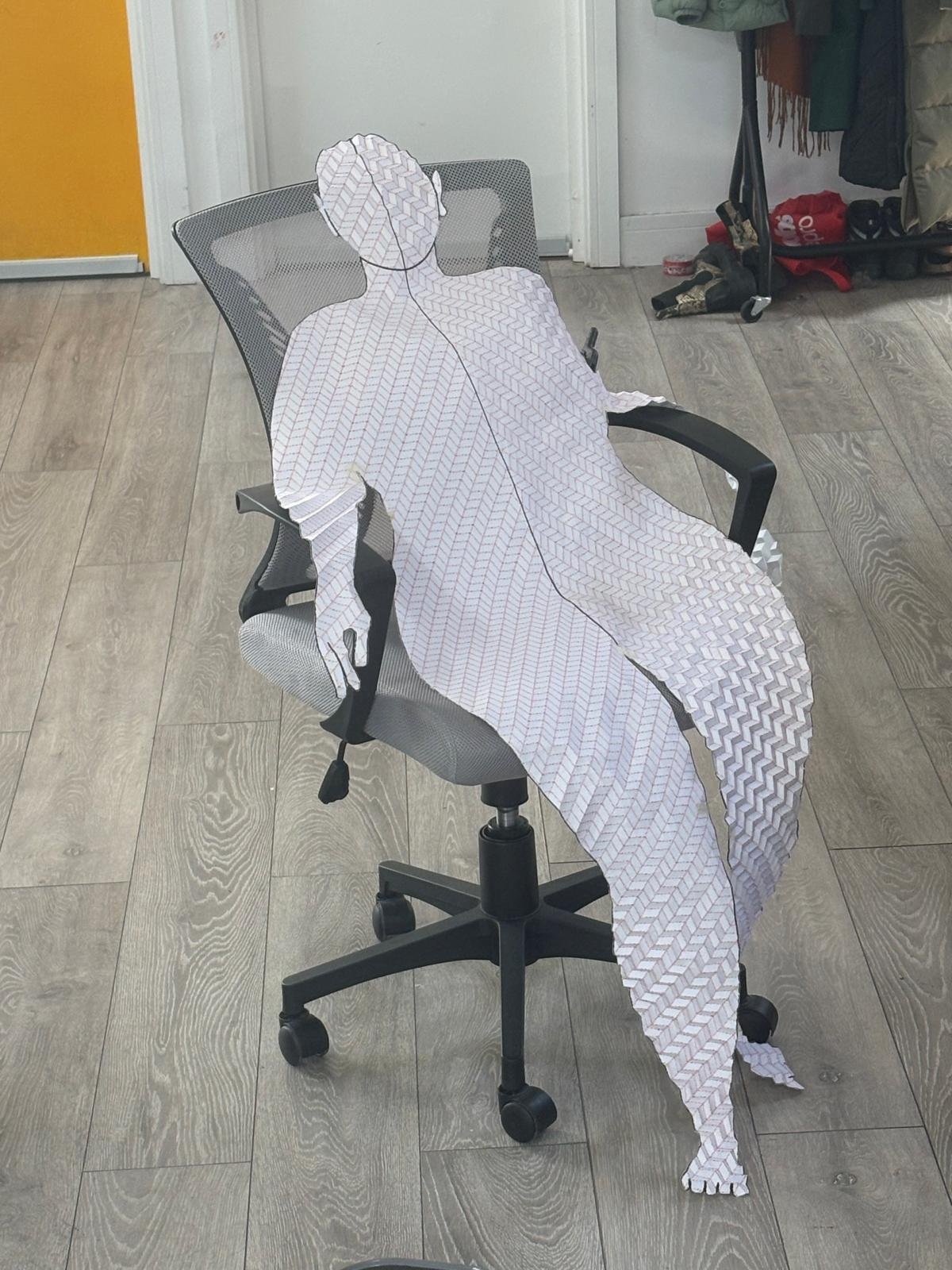
Traditional pleating uses paper moulds to permanently transform fabric with heat and steam. People Fold extends this heritage craft by treating the mould itself as an anatomical study, translating the coronal plane of the body into a responsive folding system.
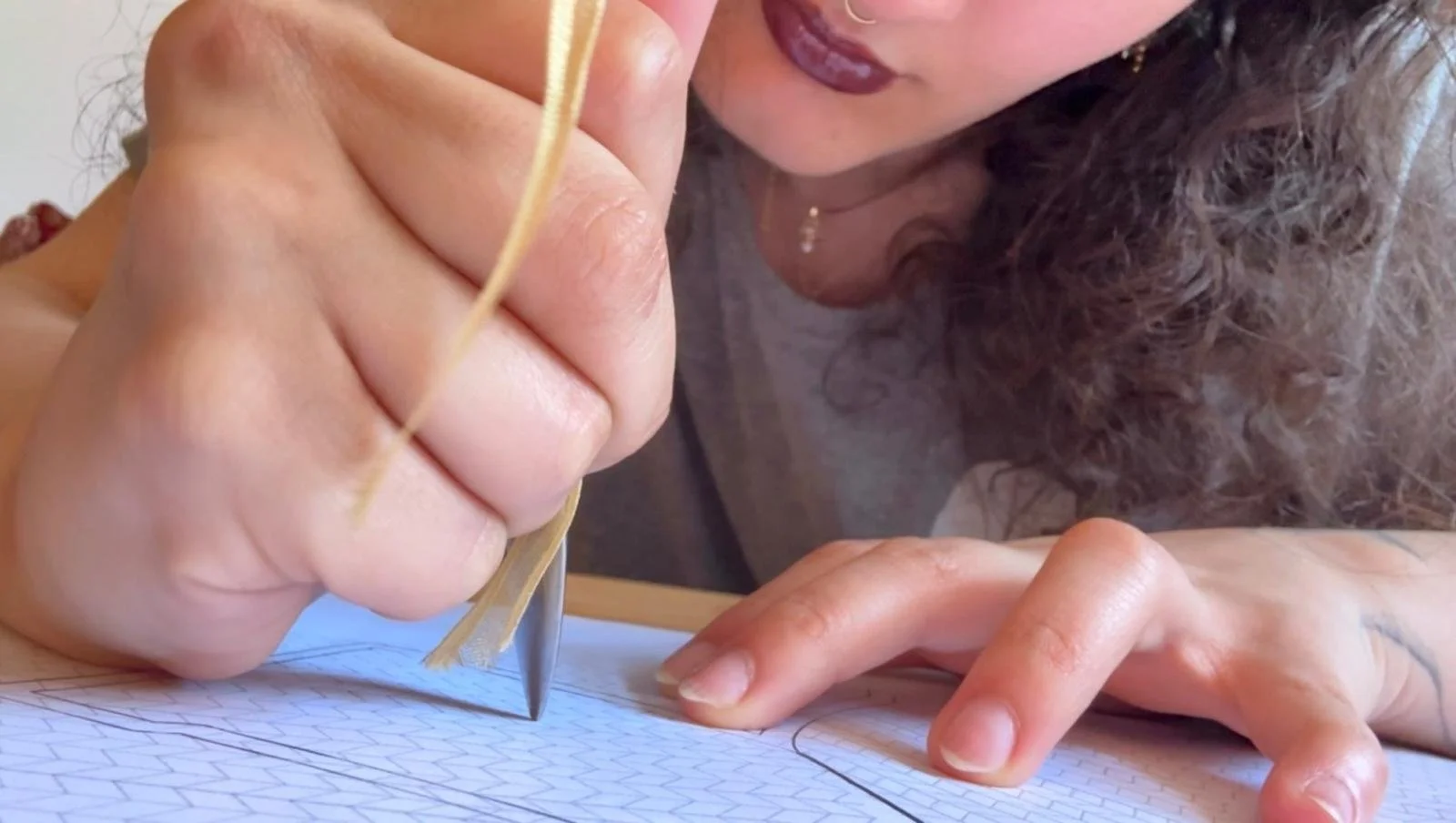
Score. Thousands of lines are pressed into the paper with a dulled awl or bonefolder, programming where the material will bend while its faces remain completely flat.
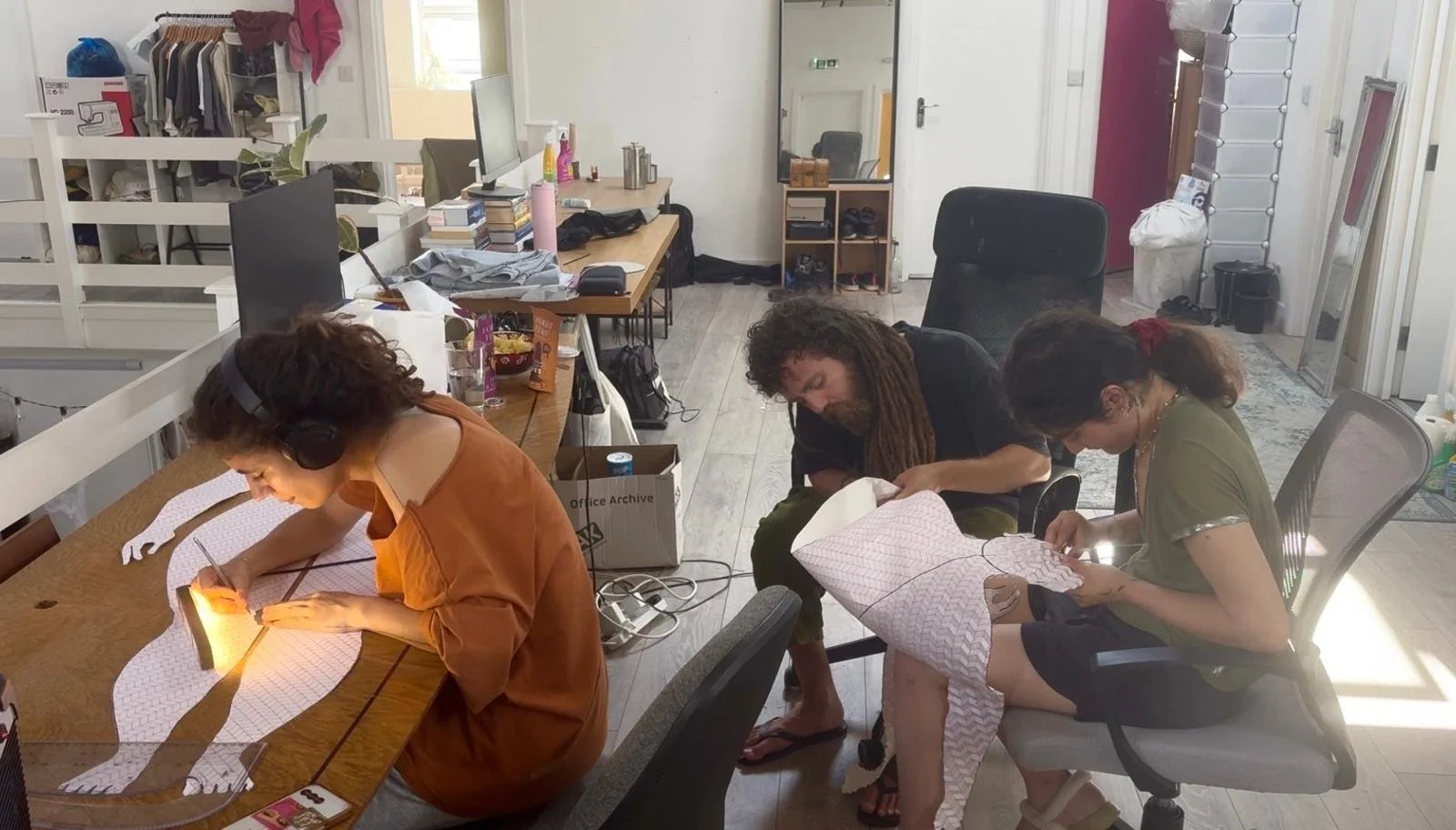
Fold. Hinging the paper fibres without tearing them. This allows the sheet to become flexible enough to form volume.
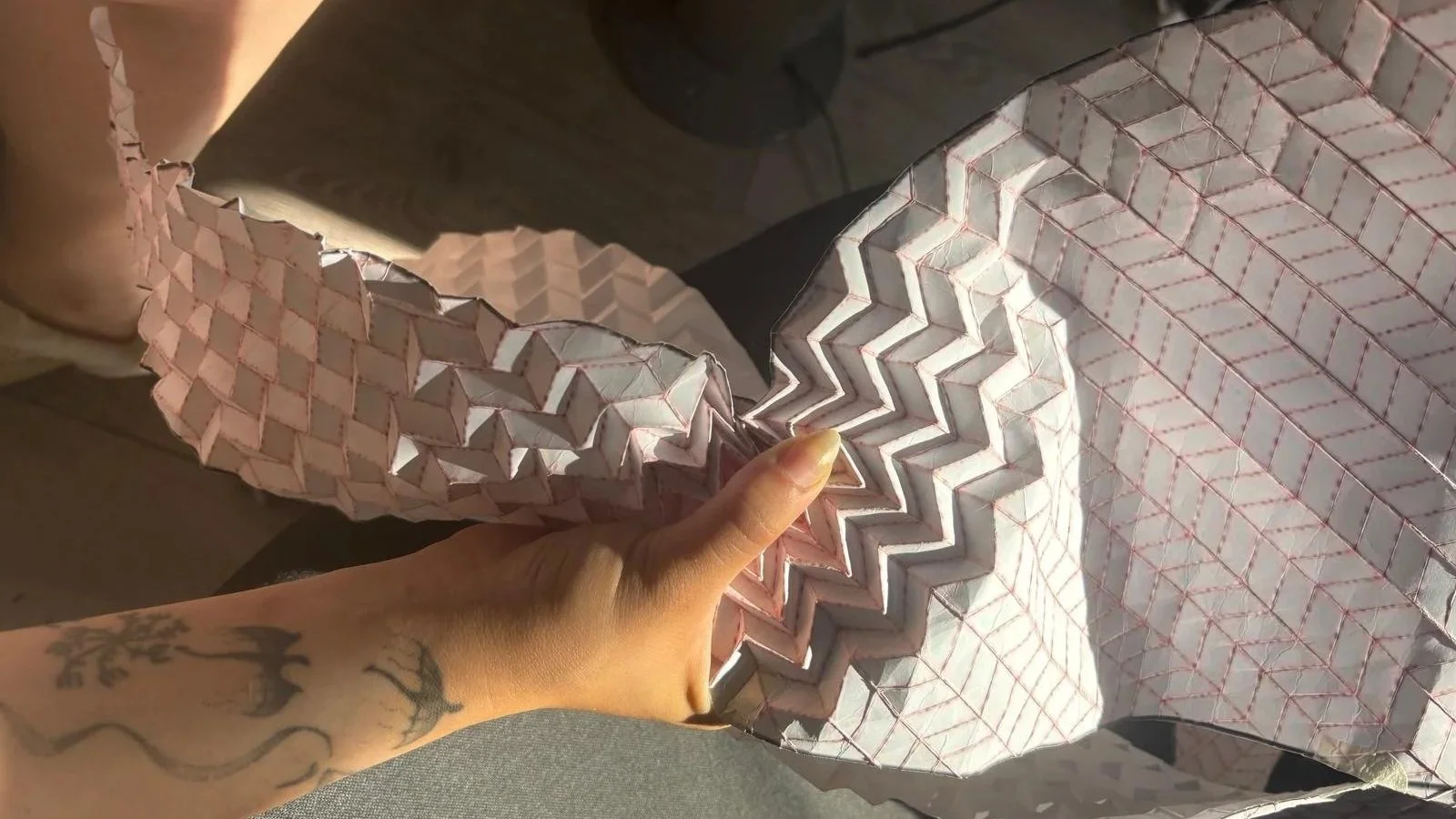
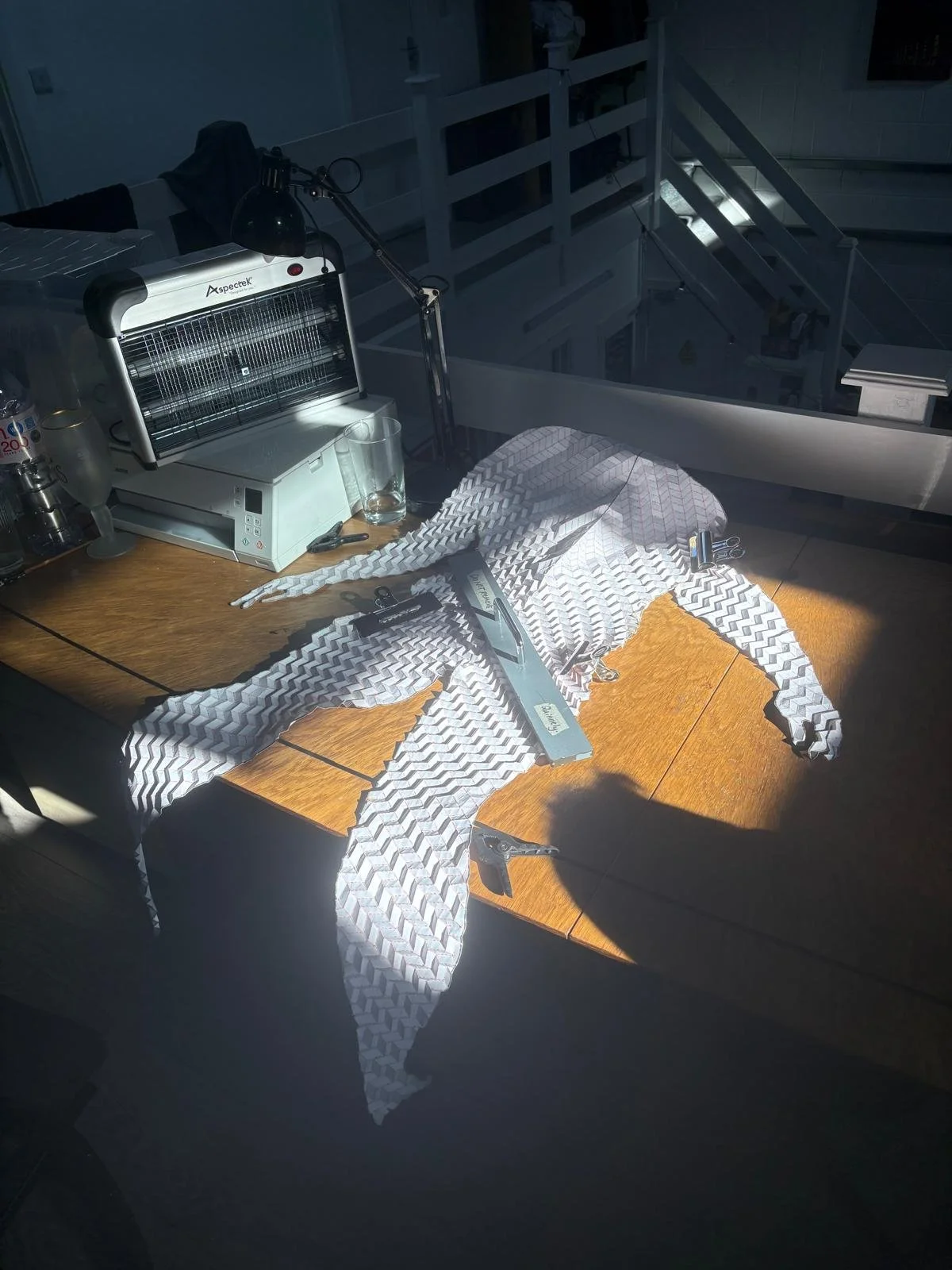
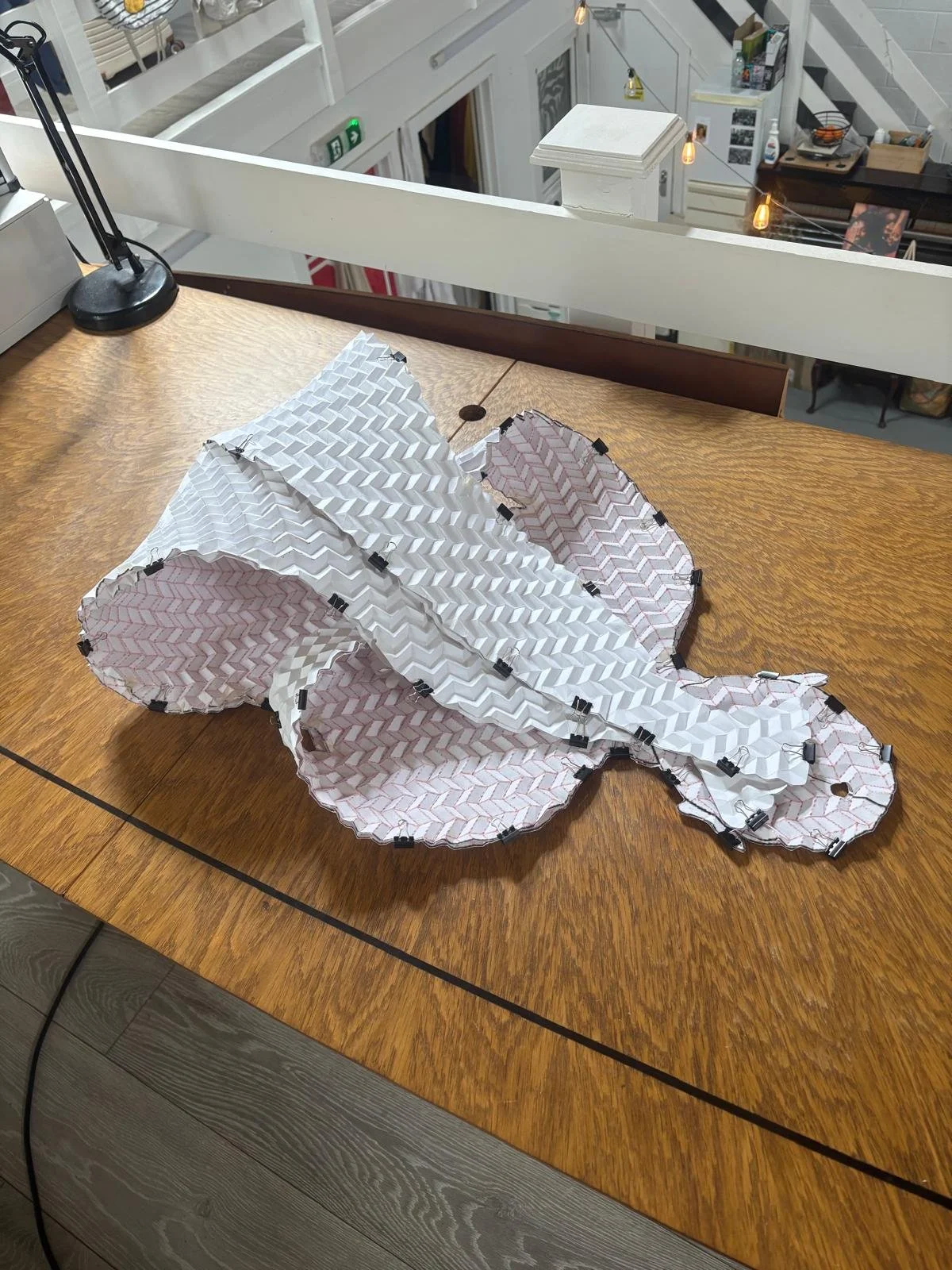
Crack. Once folded, the tension decreases. As the valleys and folds are cracked and pulled, the paper transforms into a three-dimensional mould. The structure compresses while maintaining the same surface area.
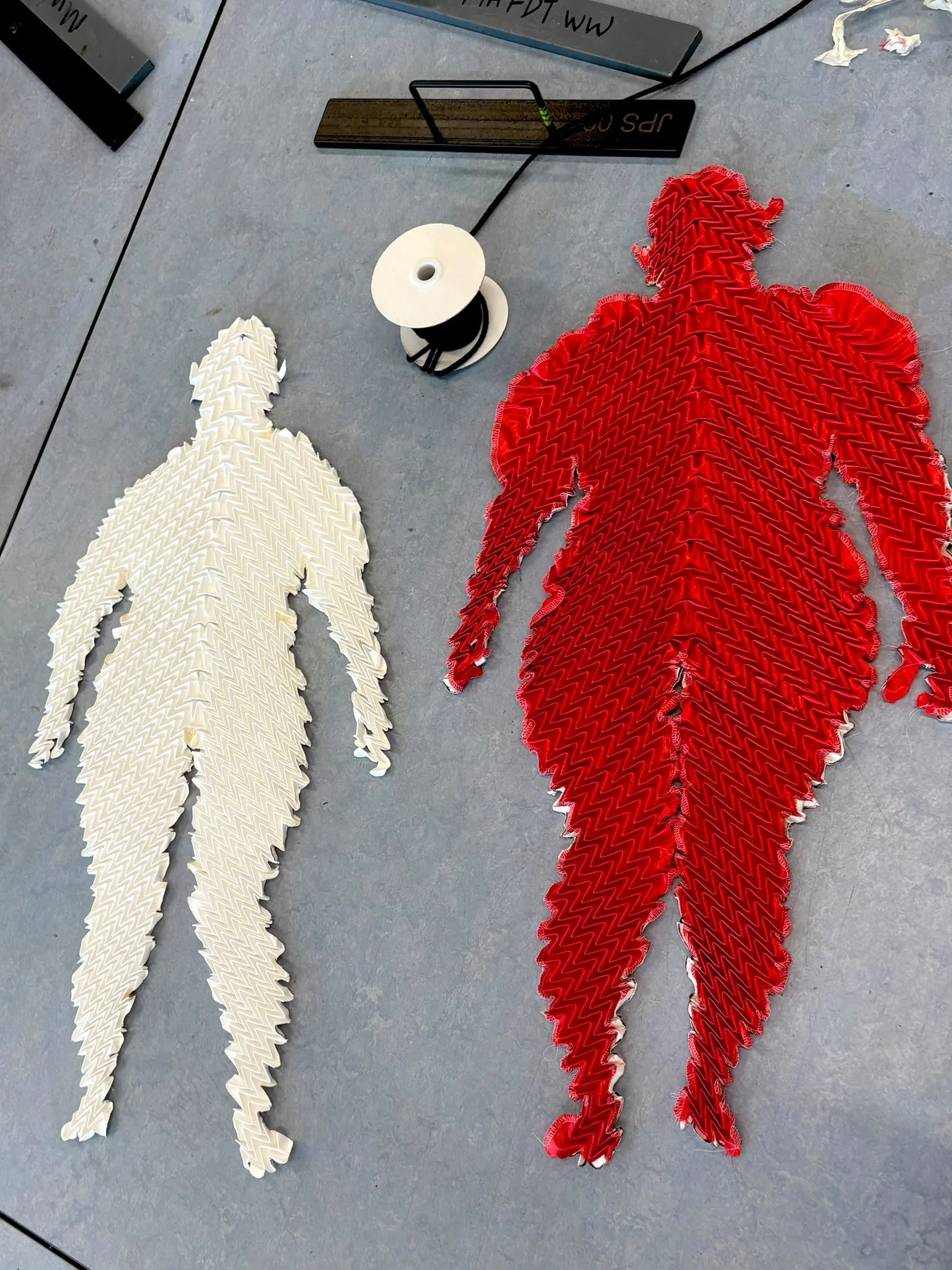
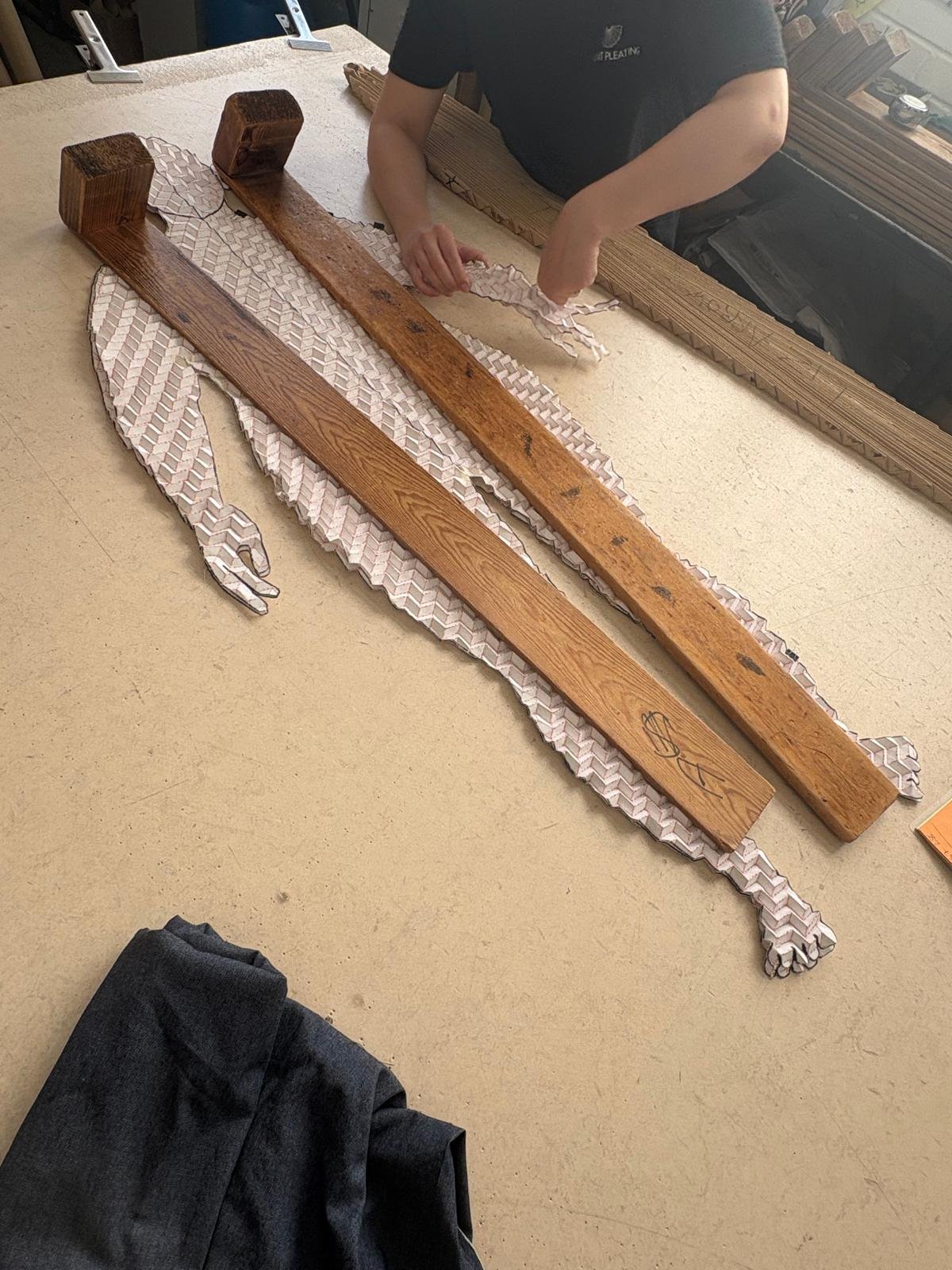
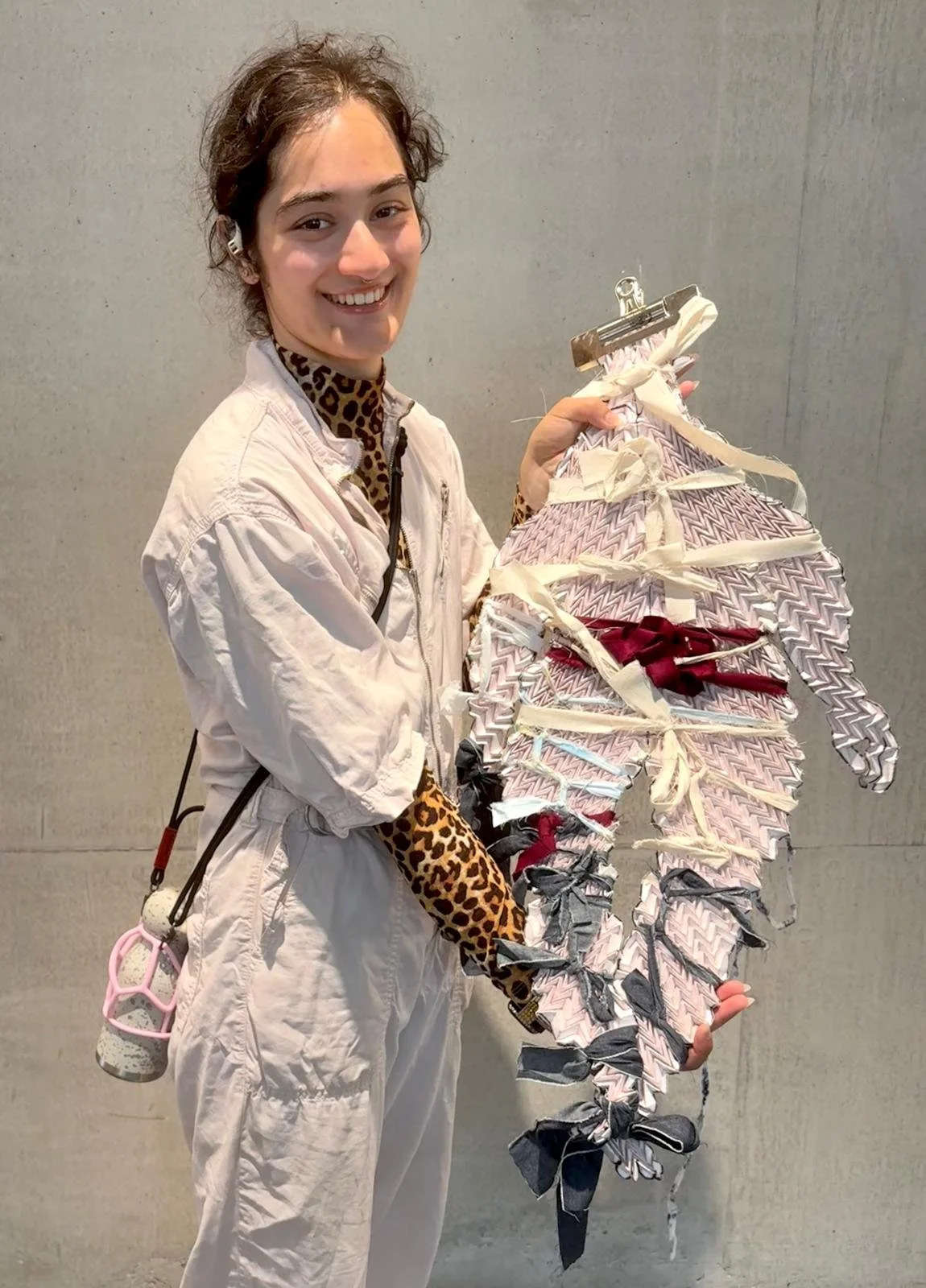
In studio, first view in mould.
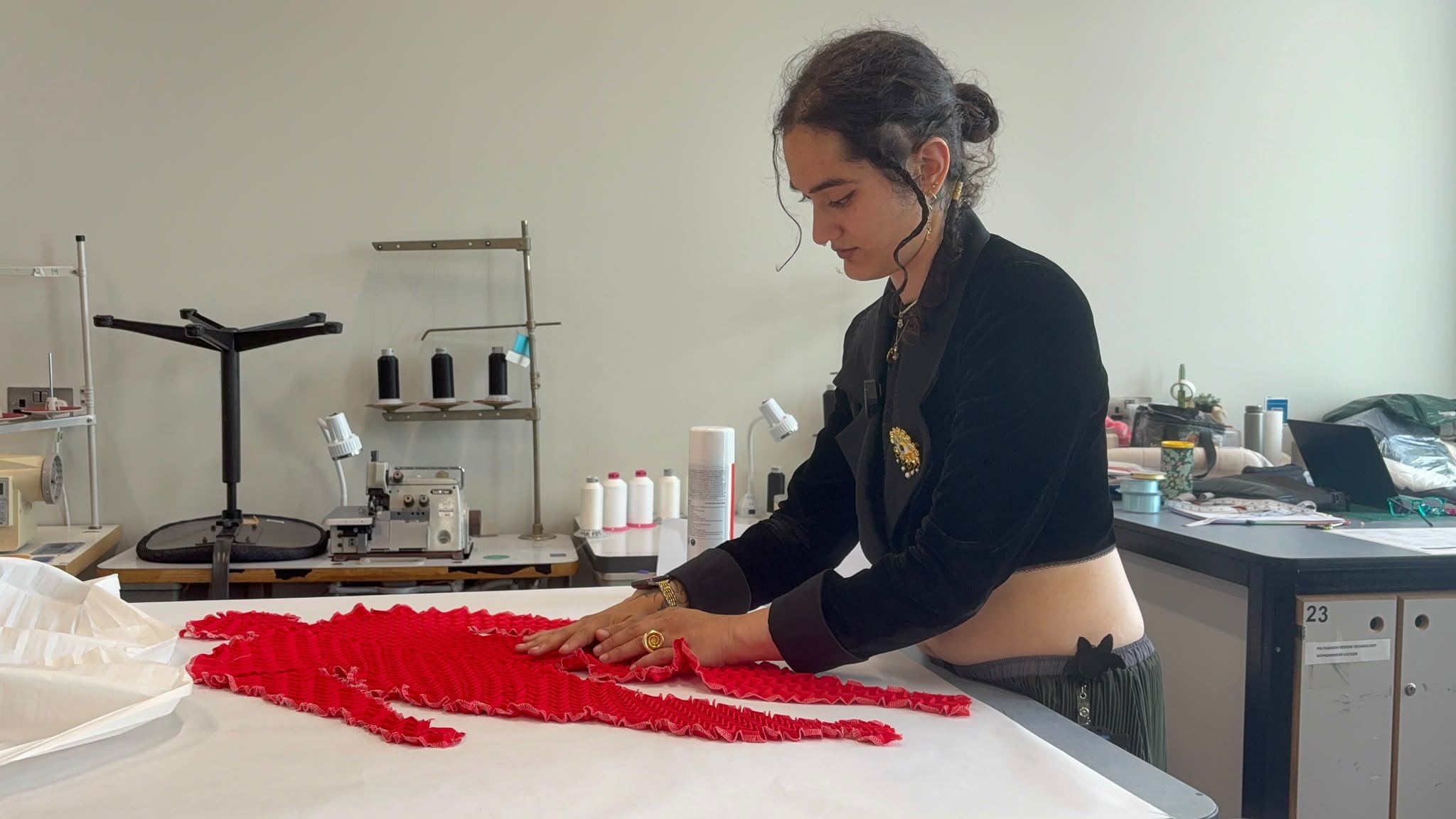
In studio, compressing the fabric.
Once released, the textile retains the memory of the fold.
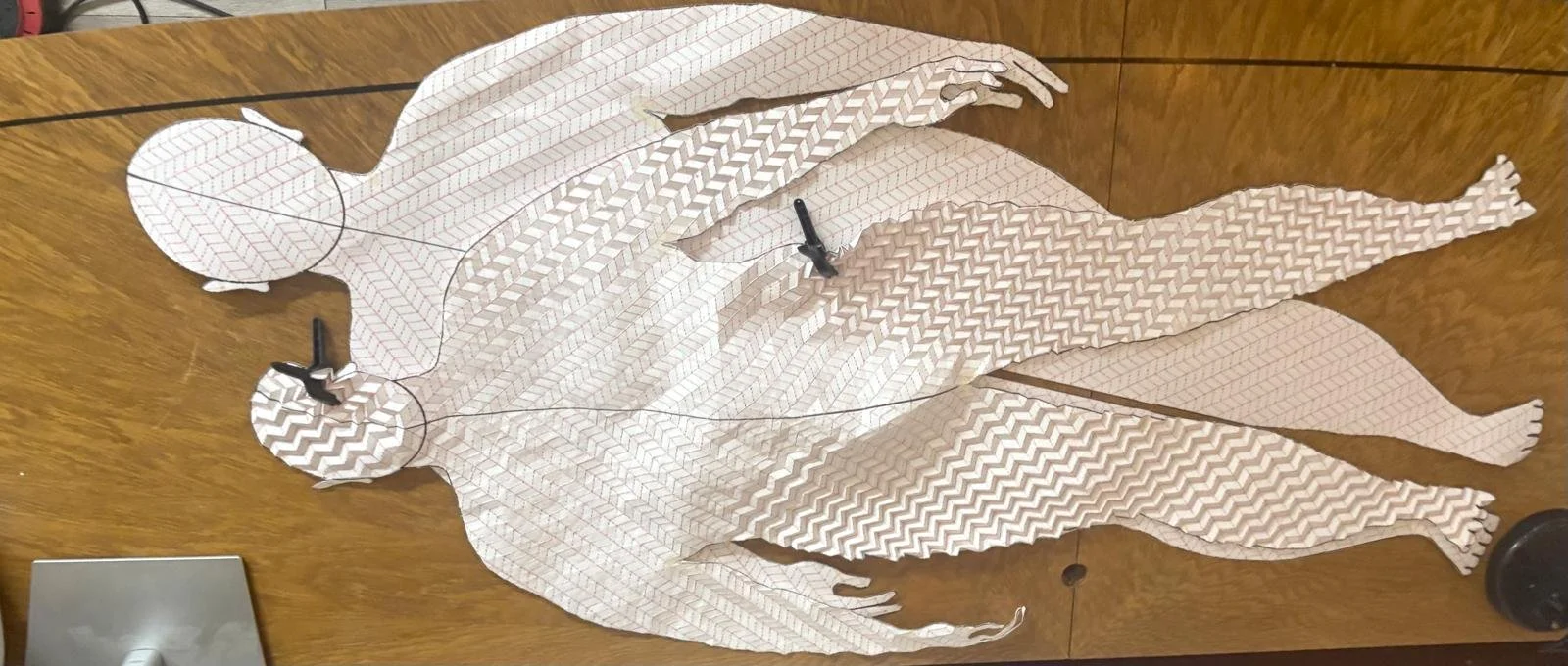
The same body at two points in time, youth and adult.
The fabric shadow can be folded down inside the mould to the size of a child, no curves, but no information lost.
Two people make one mould, one mould makes a new person.
“People fold” is an origami tessellation of the coronal plane, made to visualise how a body can take up space and change shape during growth. The coronal plane is the vertical plane that divides the body into front and back, anterior and posterior.
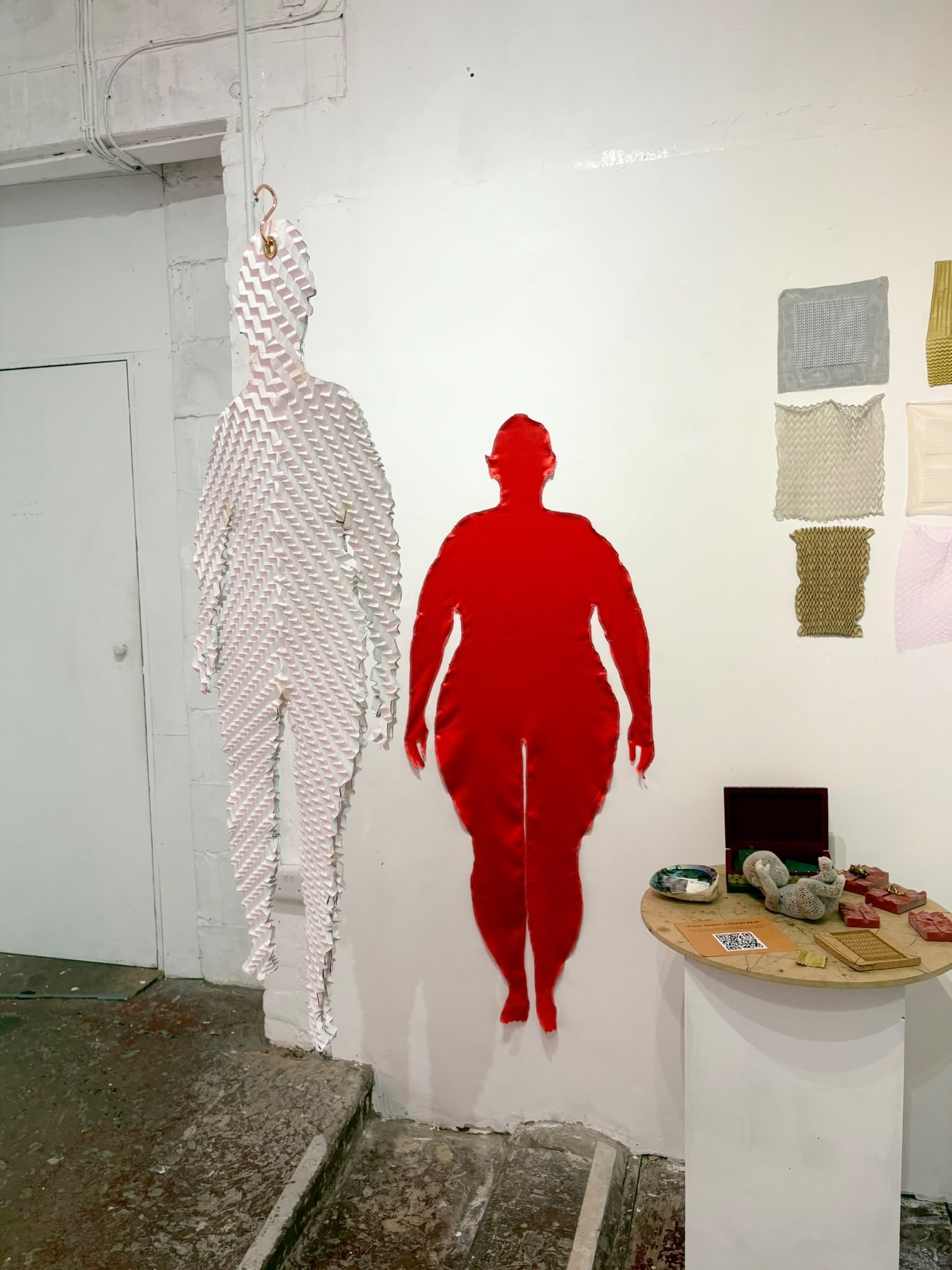
Textile Junction, Hastings, England. 2026.
Before fabric is compressed, steamed, and heat-set.
This is the first in a series exploring how folding can describe the changing geometry of the human body. Focusing on the coronal plane, the work translates bodily form into a single pleated system capable of expanding from approximately 75 cm to 155 cm in height. By examining how volume is redistributed throughout different stages of life, from childhood to a curvier feminine form, the project asks whether folding can become a method for mapping anatomy in motion.